16 April 2026
Buying Property in the Philippines as a Foreigner: What Is Actually Possible
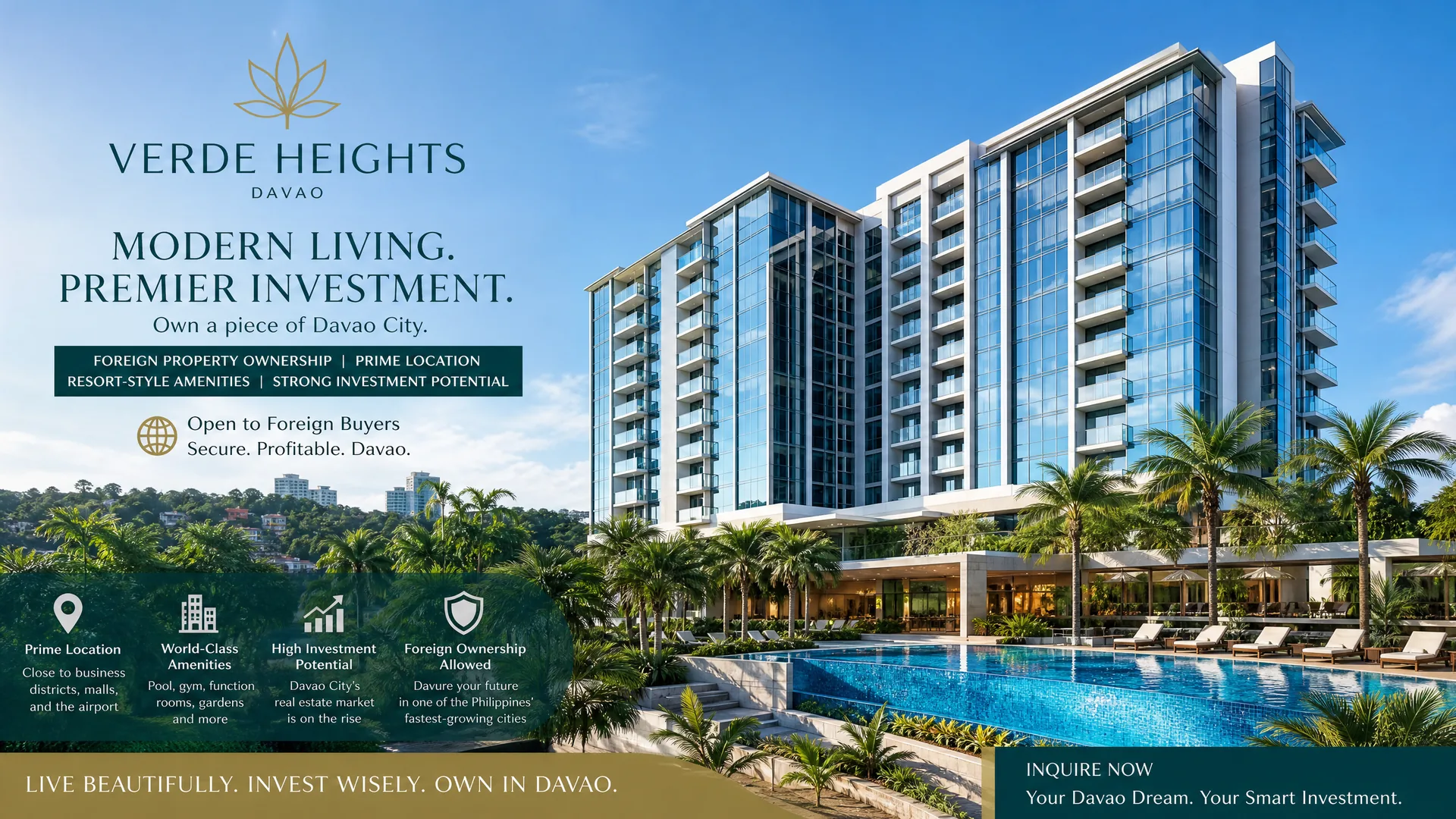
Property is the most misunderstood subject for foreigners weighing up the Philippines, and the misunderstanding runs in both directions. Some people believe they can buy anything if they find the right workaround. Others believe foreigners cannot own property at all. Both are wrong. Here is the clear account.
The basic rule on land
Foreigners cannot own land in the Philippines. The Philippine Constitution reserves land ownership for Philippine citizens and for corporations that are at least 60% Philippine-owned. This is not a technicality or a soft guideline. It is a constitutional provision, and it is enforced. Any scheme that claims to get a foreigner around it should be treated as a red flag, not an opportunity.
What foreigners can own
Foreigners can own condominium units outright, in their own name, subject to a single limitation: a building cannot exceed 40% foreign ownership in aggregate. Once 40% of the units in a project are foreign-held, no further units in that building may be sold to foreigners.
In practice, in Davao City's major developments, that ceiling is rarely hit. There is a real, accessible market for foreign condo buyers, with genuine choice across price points. This is full legal ownership, evidenced by a proper title, not a lease dressed up as ownership.
The process
The path is well-trodden and, with a competent local property lawyer, straightforward:
- •Obtain a Philippine TIN.
- •Sign a contract to sell with the developer or seller.
- •The notarial and transfer process is handled by your local property lawyer.
- •On completion, you receive a Condominium Certificate of Title (CCT) in your own name.
Budget for the costs around the purchase, not just the price:
- •Transaction costs of 3% to 5% (notarial, documentary stamp, and registration fees)
- •Annual property tax of roughly 1% to 1.5% of assessed value
- •Monthly condominium dues of PHP 2,000 to 10,000 (about USD 35 to 175), depending on the building and its facilities
Davao City price guide (2026)
Real ranges for the current market, with PHP as the anchor:
- •Entry-level (studio or small two-bed, 30 to 50 sqm): PHP 3 to 5M (about USD 52,000 to 88,000)
- •Mid-range (two to three bedroom, modern): PHP 5 to 10M (about USD 88,000 to 176,000)
- •Luxury (Aeon Towers, Dusit Thani Residences): PHP 10 to 25M (about USD 176,000 to 440,000)
What is not legal, and not worth the risk
Nominee arrangements, where a Filipino holds title to land on behalf of a foreigner, are illegal. The Anti-Dummy Law and the Foreign Investment Act make these criminal, not merely unenforceable, and the consequences fall on the foreigner as well as the nominee. We do not facilitate, structure, or advise on them. If a broker offers you one, walk away.
A related point that surprises people: a foreigner married to a Philippine citizen does not acquire land rights through the marriage. The land belongs to the Philippine citizen spouse alone.
The legitimate alternative to owning land
If your heart is set on a house and lot rather than a condo, the lawful route is a long-term lease of the land for up to 25 years, extendable by a further 25, while owning the structure on it. For many people that 50-year horizon is more than enough, and it is fully legal, which is the only kind of arrangement we will help you build.
Owning in the Philippines is entirely possible. It just has to be the right asset, held the right way. Inside those lines there is a real and attractive market. Outside them lies trouble dressed up as a shortcut.
Ready to build your Davao base?
Order services directly, or book a call with Tim to discuss your situation first.