12 February 2026
Living in the Philippines Without a Long-Stay Visa: The 36-Month Tourist Route
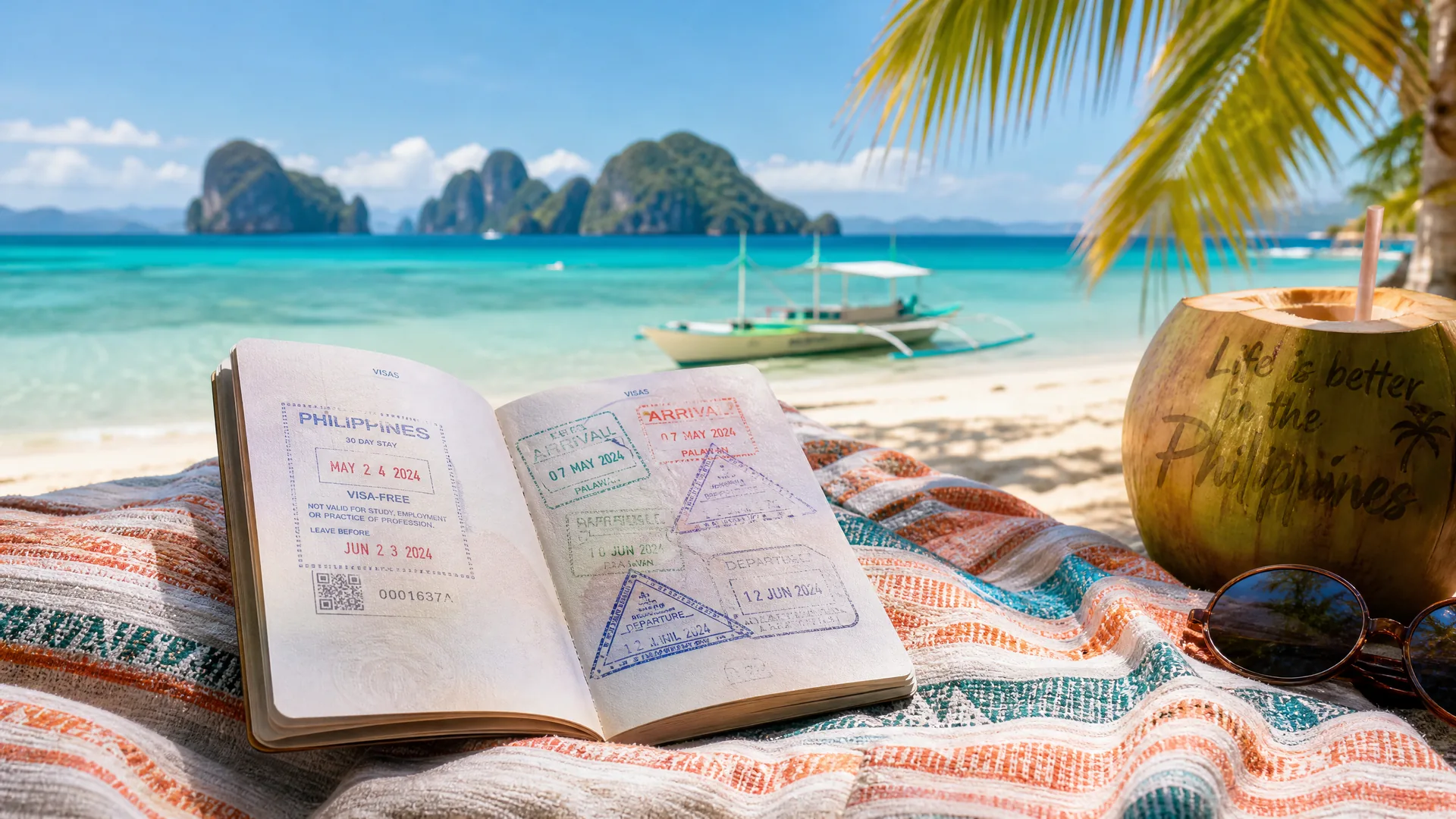
Most people assume that living in a country long-term requires a long-term visa. In the Philippines, that assumption is wrong, and the gap between assumption and reality is one of the most useful features of the entire system.
You can live here legally for up to three years on a tourist entry, extending it from inside the country, without ever applying for a residency visa abroad. For remote workers earning from foreign clients, it remains, despite the noise about other options, the route that actually works.
How the tourist route works
Citizens of most Western countries, including the United States, the United Kingdom, Australia, Ireland, Canada, and EU member states, arrive in the Philippines visa-free and receive an initial 30-day admission stamp. No application, no embassy appointment, no deposit.
From there, you extend from inside the country through the Bureau of Immigration. The first extensions come in shorter increments, and later ones in longer blocks, building up to a total continuous stay of up to 36 months. When you hit the ceiling, a brief exit and re-entry resets the clock and you can begin again.
A few practical points that trip people up:
- •After roughly two months of continuous stay you will be required to obtain an ACR I-Card, the foreign resident identity card. We handle this as part of a base setup.
- •Each extension carries a government fee. The cost is modest, but it is recurring, so budget for it across a long stay.
- •Extensions are an administrative routine, not a guarantee. Keeping your paperwork clean and your stay continuous is what makes the process boringly reliable, which is exactly what you want.
What the tourist route does and does not allow
This is the line that matters: you may live on a tourist extension, but you may not work for the local Philippine economy. Taking a job with a Philippine employer or invoicing Philippine clients is not permitted without a work permit.
Earning from entirely foreign sources is a different matter. If your income comes from clients or a business outside the Philippines, that income is foreign-sourced, and under the country's territorial tax system it sits outside Philippine tax. For a consultant, investor, or online business owner serving overseas clients, the tourist route is often the simplest possible starting point. Enter, extend, and live.
Where tax residency comes in
Spend more than 183 days in the Philippines in a calendar year and you become a Resident Alien for tax purposes, which is the most advantageous position available to a foreigner here. You are then taxed only on Philippine-sourced income, with foreign income exempt. The tourist route, run continuously, gets you there on day count alone.
What about the Digital Nomad Visa?
You may have read that the Philippines launched a Digital Nomad Visa. The honest position is that it has not arrived. The government created a framework through Executive Order No. 86 in 2025, but more than a year later there is still no published list of qualifying countries and no usable application process. We do not advise relying on it, and we cover the full story in our piece on why the Digital Nomad Visa still does not exist. Until that changes, the tourist extension is the route remote workers actually use.
Tourist route or SRRV? How to choose
Two working routes, two profiles:
- •Tourist extension suits someone who wants maximum simplicity and flexibility, is comfortable with recurring extensions, and earns from foreign sources. No deposit, no application abroad, up to 36 months.
- •SRRV suits anyone 40 or over who wants a permanent base with no day-count obligation and is happy to place a refundable deposit. Indefinite residency, no annual report, full Resident Alien status.
For many of our clients the answer is sequential: start on a tourist extension or the DNV to establish a real base now, then move to the SRRV once it makes sense. The base you build, the lease, the tax registration, the bank account, carries across all three.
How we help
We manage tourist extensions on an ongoing basis so you never miss a deadline, we handle the ACR I-Card, and we prepare SRRV and other long-stay visa applications end to end. The visa is only ever one layer of a real base. The address, the bank account, and the tax registration underneath it are what make the whole thing hold up.
Ready to build your Davao base?
Order services directly, or book a call with Tim to discuss your situation first.