7 May 2026
The Philippine Passport as a Long-Game Plan B: Naturalisation, Timelines, and Reality
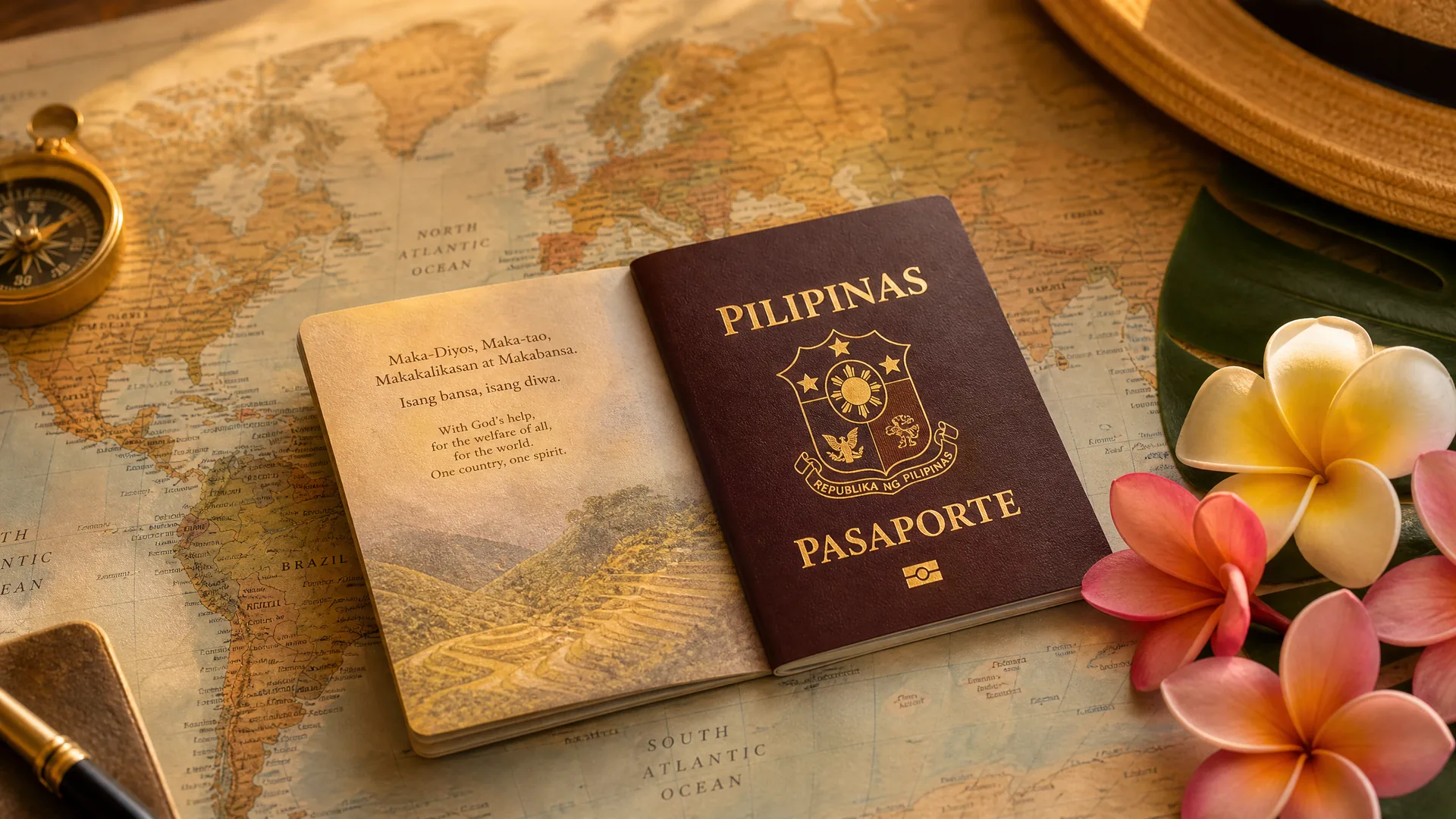
Let me be honest with you from the first line, because this is a subject where honesty is rarer than it should be. There is no citizenship-by-investment programme in the Philippines. No fast track. No donation route. No agency that will sell you a passport in eighteen months.
If someone tells you otherwise, walk away. What the Philippines does offer is something slower and, in its own way, more durable: a genuine path to naturalisation for people who actually build a life here. It is a long game. For the right person, it is a game worth playing.
How Philippine citizenship is actually acquired
Naturalisation in the Philippines is governed primarily by Commonwealth Act No. 473. It is a judicial process, which means it runs through the courts rather than through a points calculator. Each application is examined individually and scrutinised. It is not guaranteed.
The standard requirement is ten years of continuous legal residence in the country. That period can be reduced to five years in specific situations, including being married to a Philippine citizen, having been born in the Philippines, or having a Philippine citizen child.
There are also character, language, and integration expectations woven through the statute. This is a process designed to confirm that you have genuinely made the Philippines your home, not merely parked a status.
What the passport is actually worth
A Philippine passport will never top the global mobility rankings, and anyone evaluating it purely on visa-free numbers is asking the wrong question. Its value is different in kind.
- •Useful regional and selective global mobility, including visa-free or simplified access across much of Southeast Asia and to a range of countries elsewhere
- •A territorial-only tax system attached to the citizenship itself, which is a meaningful contrast to the citizenship-based taxation that follows Americans everywhere
- •No conscription
- •A politically neutral, low-profile document that attracts little attention at borders, which for some people is precisely the point
This is not a passport you acquire to skip visa queues in Europe. It is a passport you acquire because it sits inside a low-tax, low-profile, optionality-rich position, and because a second citizenship is a foundation that nobody can quietly legislate away from you.
Why residency now is the real move
Here is the part that connects to everything else we do. Citizenship is the end of a road, and the road starts with residency. Ten years of continuous legal residence is not something you begin the day you decide you want a passport. It is something you begin the day you establish a real, documented base and start living it.
The clients who will, years from now, be in a position to consider Philippine citizenship are the ones who set up a genuine residency today: a real lease, a tax registration, a bank account, an SRRV or SIRV, and an actual presence that holds up to examination. The passport is a possibility you earn by accumulating years of substance, not a product you buy at the end.
A realistic view
I will not oversell this. Most people who build a Philippine base will never pursue citizenship, and that is fine, because the base delivers most of the benefit on its own: the territorial tax position, the residency, the optionality. Citizenship is the optional final chapter for those who put down deep roots and stay.
But if you are the kind of person who thinks in decades, who wants a sovereign fallback that cannot be revoked by a policy change in a country you left, then the Philippine passport is a viable long-term strategy. Not a shortcut. A long game, started properly, today.
That is what a real base is for. It is the thing every later option, including this one, is built on.
Ready to build your Davao base?
Order services directly, or book a call with Tim to discuss your situation first.