8 January 2026
The SRRV at 40: What the New Age Threshold Means for Early Retirees and Remote Workers
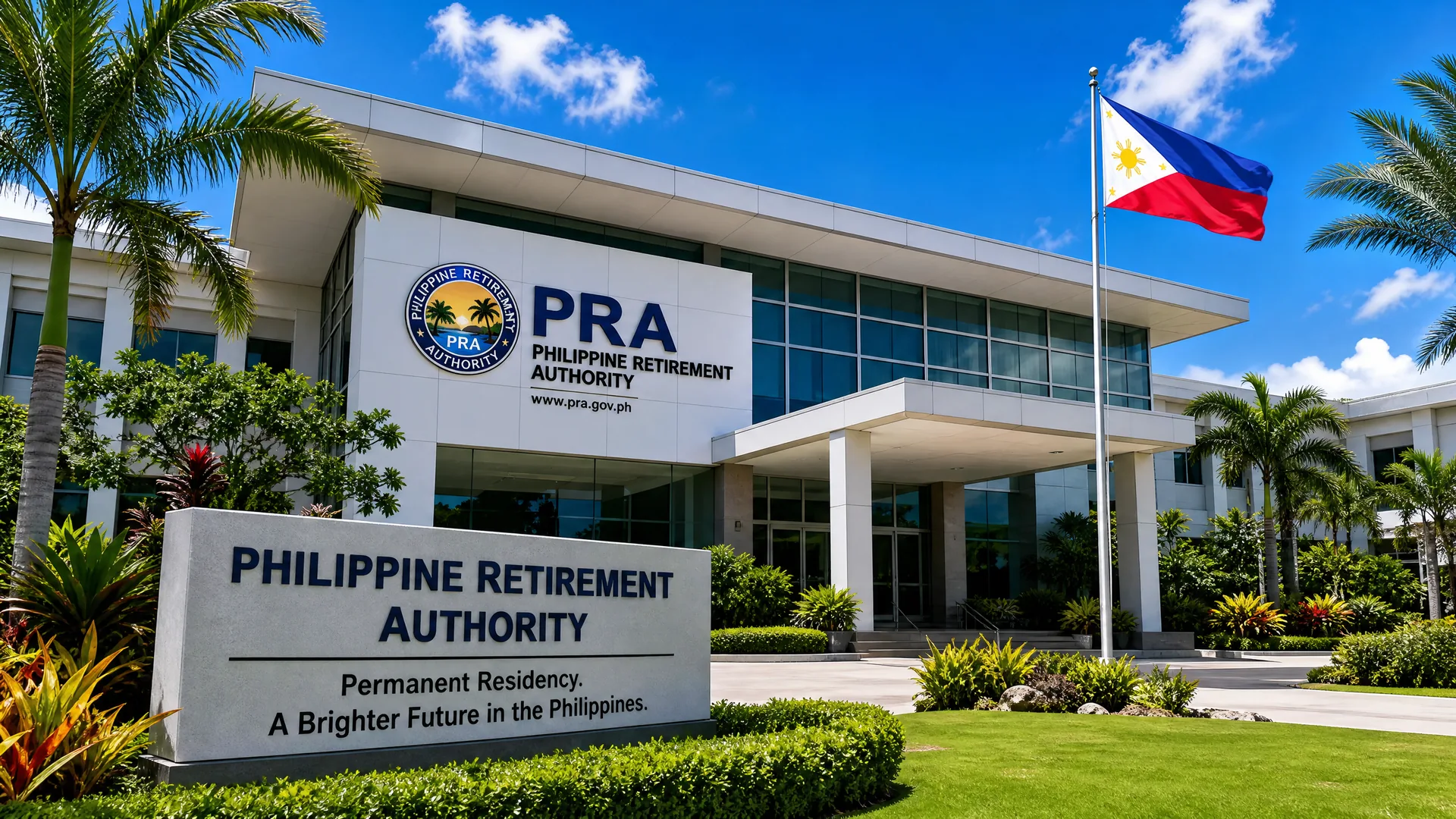
On 1 September 2025, the Philippine Retirement Authority did something that quietly reshaped the most practical long-term residency option in Southeast Asia. It lowered the minimum age for the Special Resident Retiree's Visa (SRRV) from 50 to 40, and it scrapped the confusing patchwork of categories that had built up over the years.
If you are in your forties and have been told the Philippines was not yet an option for you, that is no longer true. The change is larger than a single number on an eligibility form. It moves the SRRV from a retiree product into a genuine residency tool for early retirees, FIRE-minded professionals, and remote workers who want a permanent base without a permanent obligation to be physically present.
What the SRRV actually is
The SRRV is issued by the Philippine Retirement Authority (PRA) and grants indefinite, multiple-entry residency. It is not a tourist stamp. It is not a one-year permit you have to keep renewing. Once granted, it stays valid for as long as you maintain the required deposit and your annual PRA membership.
The practical privileges are what make it attractive:
- •Indefinite residency with no annual renewal of the visa itself
- •Exemption from the Bureau of Immigration annual report that other foreign residents must file
- •Exemption from exit and re-entry permits, so you come and go freely
- •Exemption from the travel tax on departure
- •A PRA membership card in place of the ACR I-Card most foreigners must carry
- •Exemption from Philippine tax on your foreign pension and annuity income
For an internationally mobile person, the most valuable item on that list is the one that is easy to miss: you do not have to be in the country a minimum number of days to keep your status. Your residency rests on your visa, not on a day count.
What changed in September 2025
Three things changed at once.
First, the minimum age dropped from 50 to 40. That is the headline.
Second, the old categories were retired. The SRRV Smile and SRRV Human Touch variants were abolished. What remains is cleaner: SRRV Classic for ordinary applicants, and SRRV Courtesy for former Filipinos and certain retired officials and military.
Third, the deposit structure was rebuilt around two age brackets and whether or not you have a qualifying pension.
The new deposit tiers
The required deposit is held as a US-dollar time deposit in a PRA-accredited Philippine bank. It is your money, refundable when you surrender the visa. These are the SRRV Classic figures under the current rules:
- •Ages 40 to 49, with a qualifying pension: USD 25,000
- •Ages 40 to 49, without a pension: USD 50,000
- •Ages 50 and above, with a qualifying pension: USD 15,000
- •Ages 50 and above, without a pension: USD 30,000
To use the lower, pension-based tier you generally need to show a lifetime pension of at least USD 800 per month (a little more if you are including dependents). State pensions such as US Social Security or the UK State Pension qualify, as do many employer and private retirement plans.
There is also a one-time PRA processing fee, currently USD 1,500 for the principal applicant, plus a smaller fee per dependent.
The deposit is not money you lose
This is the point most people misunderstand. The deposit is not a fee. It sits in your name. And under the Classic category it can later be converted into an eligible investment, most commonly the purchase of a condominium unit or a long-term lease, subject to PRA rules and a minimum conversion threshold. In other words, the capital you park to qualify can become the roof over your head.
Who benefits most from the age change
The reform was written for retirees. In practice it lands hardest for people who are nowhere near retirement.
- •Early retirees and FIRE practitioners who hit financial independence in their forties now have a clean, permanent residency that does not tie them to a day count.
- •Remote workers and location-independent professionals who want a fixed legal and tax base, but who travel constantly, get exactly the structure they need: residency that survives long absences.
- •Frequent travellers who were stitching together tourist extensions can stop. The SRRV removes the annual report, the exit permits, and the uncertainty.
If you are under 40, the SRRV is still out of reach, and the tourist extension route or the new Digital Nomad Visa will be your starting point. Once you turn 40, the calculus changes.
The tax angle that matters
The Philippines runs a territorial tax system. As a Resident Alien, you are taxed only on Philippine-sourced income. Foreign dividends, foreign capital gains, foreign business income, and foreign pensions are not taxed here at all.
The SRRV gives you Resident Alien status through the visa itself, independent of how many days you spend in-country. For someone who wants a recognised tax base but lives on the move, that is the whole game. You hold a real residency, a real address, and a real tax registration, and your foreign income stays outside the Philippine net.
What the SRRV does not do is change your home country's rules. If you are American, you remain a US taxpayer for life. If you are leaving a country with exit-tax or controlled-foreign-company rules, those still apply on the way out. The SRRV is one piece of a larger picture, not a magic eraser.
The process, briefly
The smart approach is to prepare and authenticate your documents before you ever board a flight. The core file usually includes your passport, the SRRV application form, a medical clearance, a police or background clearance from your country of residence, photographs, proof of your deposit remittance, and pension evidence if you are using the lower tier. Documents issued abroad generally need an apostille, or consular authentication if your country is not part of the Hague Convention.
The deposit must be wired directly to the PRA's accredited bank as an inward remittance, not handed to an intermediary. Keep every bank confirmation and source-of-funds record. The PRA's own processing runs in roughly ten working days once a complete file is filed, though realistically you should plan for several weeks end to end once document preparation and Bureau of Immigration steps are included.
How we handle it
We manage the full SRRV application from Davao City: document preparation and authentication, the deposit remittance logistics, the PRA filing, and the Bureau of Immigration steps. Most of it happens before you arrive. Tim accompanies you on the ground for the steps that need you in person.
The age threshold has moved, one of several 2026 changes worth knowing. If you are 40 or older and you have been waiting for the Philippines to become a real option, it just did.
Ready to build your Davao base?
Order services directly, or book a call with Tim to discuss your situation first.